With Titrit Morocco Tours, stargazing feels less like an activity and more stepping into a different scale of reality. Part of that is geography, with wide-open desert, high mountains, and long stretches of sparsely populated land. This means there are many areas with low light pollution. Part of it is climate, as many regions have dry air and a high number of clear nights, which helps the sky look crisp and deep. Another thing is cultural atmosphere, such as sitting outside late, drinking mint tea, listening to quiet conversation or wind moving across sand. Morocco makes it easy to slow down and actually look up.
Stargazing Morocco
If you’re coming from a bright city, the first shock in stargazing Morocco is how crowded the sky becomes. In urban centers like Casablanca, Rabat, Marrakech, or Tangier, the sky still offers familiar sights, with a handful of bright planets when they’re in season, maybe Orion in winter, but streetlights and haze wash out the faint stuff. Drive an hour or two away, though, and the sky starts to change. Milky Way can become visible as a pale river of light, and then, in the best conditions, it turns into something textured, with lanes of darkness, mottled star clouds, and a sense of depth that photographs rarely capture.
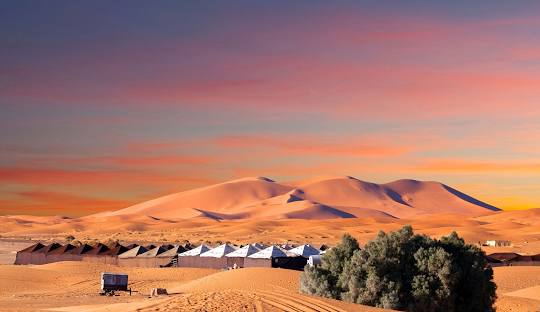
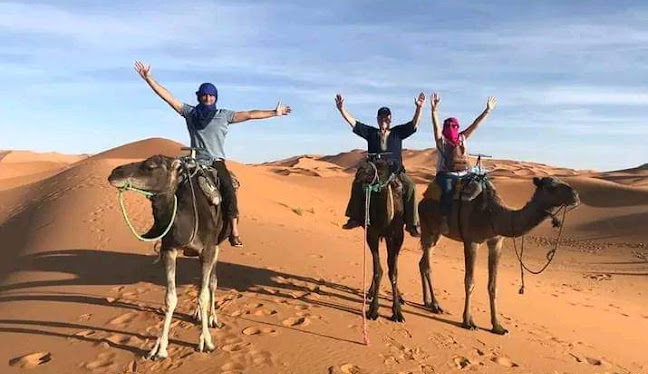
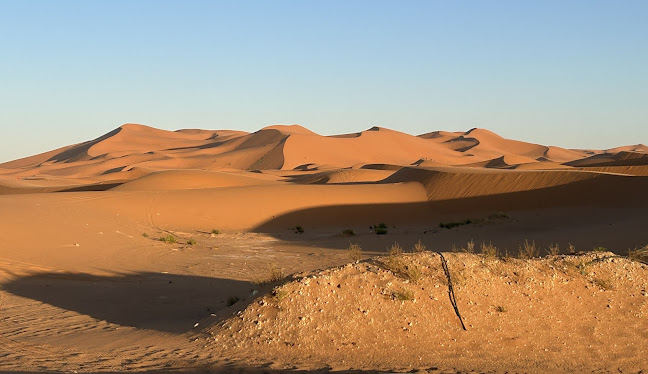
You’ll notice constellations you thought knowing suddenly look different because the background stars that never showed up before are now visible, filling in the shapes and blurring the boundaries. A classic setting for stargazing Morocco is the Sahara’s edge, especially around the dunes of Erg Chebbi near Merzouga and Chigaga close to M’Hamid. These areas are famous for sunrise camel rides and desert camps, but at night the real show begins. The desert’s low humidity often produces steady, transparent skies, and the horizon is so flat that you can watch stars rise and set with an almost ocean-like clarity.
When the moon is absent or only a thin crescent, the Milky Way can stretch between horizons. In summer, galactic center, the brightest, most insping part, sits higher in the sky, and you can make out its dense core as a luminous bulge. In winter, stargazing Morocco takes on a different personality, as Orion dominates, Pleiades sparkle, and bright stars like Sirius feel almost too sharp. Desert cold surprises many visitors, as nights can be chilly even after a hot day, and temperature drops, so warmth matters if you want to stay outside long enough for your eyes to fully adapt.
The Atlas Mountains offer a different stargazing Morocco experience, with higher altitude, cooler air, and often even less light pollution, especially in remote valleys and passes. High elevation reduces the amount of atmosphere you’re looking through, which can make stars appear brighter and the sky darker. There is also a special kind of silence in the mountains at night, a sense of being perched above the world. Places in the High Atlas near small villages, or routes that lead toward the anti-Atlas and the pre-Sahara, can be rewarding.
The view can be spectacular if you can find a spot with a clear panorama and minimal local lighting. Mountain weather, however, is less predictable than the desert. Clouds can roll in, and wind can be strong. On the other hand, when conditions are right, the steadiness of the air can make planets look remarkably crisp through binoculars or a small telescope. Then there’s the southern interior, including regions like the Draa Valley, areas around Ouarzazate, and stretches of the Anti-Atlas, where arid plateaus and rocky landscapes create excellent dark-sky pockets for stargazing Morocco.
These zones have a particular romance, with old fortresses silhouettes, palm oases, and a sense of distance from everything. Here, stargazing Morocco often blends with travel itself. You might finish dinner at a small guesthouse, step outside, and realize the sky has become the evening’s main event. Because these landscapes sit between the mountains and deep desert, they can combine the Sahara’s dryness with somewhat easier access and a range of accommodation styles, from simple lodges to more polished eco-retreats.
Timing matters more than people expect. Moon is the single biggest factor in how dark the sky feels. A full one can be beautiful, lighting dunes and mountains like a natural spotlight, but it will hide most faint stars and wash out the Milky Way. If your goal in stargazing Morocco is that immersive, ink-black sky with a glowing galaxy effect, you want nights around the new moon, ideally a few days before or after, when its sets early or rises late. Season also shifts what you’ll see. Summer and early autumn are prime for the richest Milky Way views, because the galactic center is visible for longer and climbs higher.
Winter brings longer nights and crisp constellation scenes to stargazing Morocco. Spring and late autumn can be excellent too, often with comfortable temperatures and a mix of planetary visibility depending on the year. You don’t need expensive gear to enjoy Moroccan stargazing, but a little preparation multiplies what you’ll notice. The human eye takes time to adjust, as it’s common to think the sky is fine after a minute, but the real transformation happens after fifteen to thirty minutes in darkness.
Avoid looking at bright phone screens. If you must use a phone for a star map, turn brightness down and use a red-light mode. Simple binoculars can be magical, as they reveal star clusters, the fuzzy glow of the Andromeda Galaxy when it’s in season, and rich patches of the Milky Way that look like glittering dust. Even without optics, learning a few anchor points helps. Find the North Star by tracing the Big Dipper’s pointer stars, or spot Orion’s belt and follow it down to Sirius. Once you have a few signposts, stargazing Morocco gives way to a landscape you can navigate rather than just a scattering of lights.
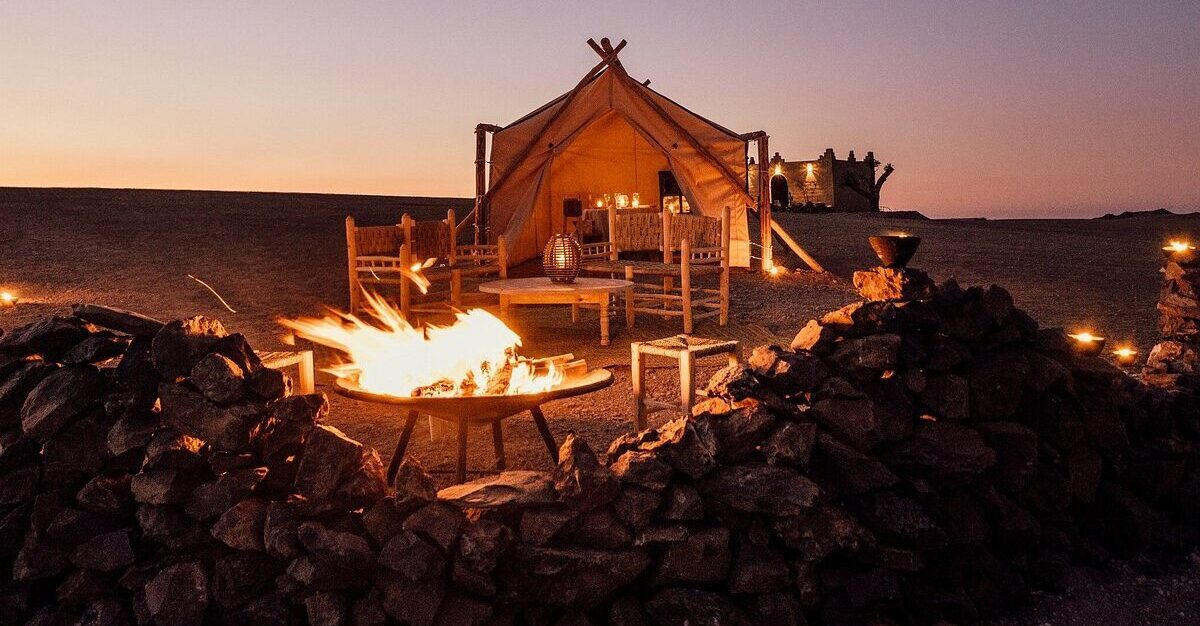
There’s also something unique about how stargazing Morocco can feel social without being noisy. In desert camps, people often gather around a fire, and guides may share stories, rhythms on a drum, or local perspectives on the night. In mountain villages, you might hear distant dogs, a murmured conversation, or nothing at all. This activity of stargazing becomes a quiet kind of shared attention. It’s one of the rare experiences that can make strangers speak softly, as if the sky itself asks for it.
Practical details make the difference between a quick look and a stargazing Morocco you’ll remember for years. Dress warmer than you think needed, especially in the desert and mountains. Bring a thermos of something hot if you can, or at least plan for a warm drink afterward. Choose a location away from direct lights, as even a single bright bulb can ruin your night vision. If you’re staying somewhere with outdoor lights, ask if they can be turned off for a while. Safety is mostly about common sense. Don’t wander alone far from camp or lodging at night in unfamiliar terrain, watch your footing on rocky ground, and in remote areas consider going with a guide who knows the landscape.
Stargazing Morocco isn’t only about astronomical conditions, though the conditions can be excellent, but in how the country’s landscapes invite your eyes outward and your mind into a slower rhythm. Under a truly dark Moroccan sky, the stars don’t feel decorative, but present, numerous, and strangely intimate. You may find yourself noticing not just objects, such as the Milky Way, a planet, or a shooting star, but the vastness between them, and the quiet that comes with realizing how much is above you every single night, waiting for darkness and a willing glance.